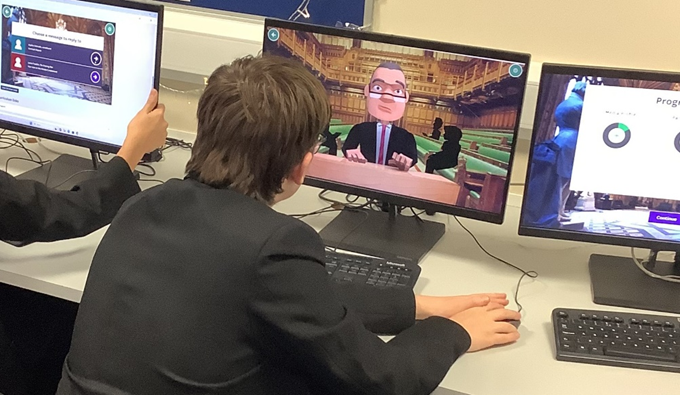
GCSE Citizenship gives students the knowledge, skills and confidence to understand the world around them and play an active role in society. The course explores how the UK is governed, including democracy, Parliament, political parties, voting systems and the role of the law. Students also examine rights and responsibilities, the justice system, the economy, and how citizens can influence decision-making locally, nationally and globally.
Citizenship develops a wide range of transferable skills that are highly valued by employers and colleges. Students learn to think critically, analyse real-world issues, debate different viewpoints, and form well-reasoned arguments. The subject strengthens communication skills, teamwork, research, problem-solving and decision-making, while also building confidence and resilience.
The qualification is excellent preparation for further study in Politics, Law, Sociology, Economics and Criminology, and supports success across many GCSE and A-level subjects. Citizenship also links directly to a wide range of career opportunities, including law, politics, journalism, teaching, business, public services, social work, policing and the civil service.
Above all, GCSE Citizenship empowers students to become informed, responsible and active citizens, ready to make a positive contribution to their communities and society as a whole.

Mr Gater – Senior Lead for Behaviour, Head of Year 10 and Citizenship Lead
| CITIZENSHIP CURRICULUM | |||
| TERM 1 | TERM 2 | TERM 3 | |
| Year 10 | Theme A: The changing UK population Migration and its impact Respect and understanding Identity Rights, duties and values that underpin democracy Development of human rights Citizens and local government Paying for local services | Theme B: Parties and candidates Elections and voting systems Forming an organising the work of the government The Westminster Parliament Making and shaping law The Constitution Government in constituent parts of the UK Taxation and government spending | Theme C: The role of law in everyday life in dealing with complex problems Principles and sources of law Civil and criminal law The justice system in England and Wales Courts and tribunals Youth justice Crime & society Sentences and punishment |
| Year 11 | Theme D: Citizenship participation in politics and society The role of groups and organisations in democratic society The role of the media and a free press Rights and responsibilities of the media The use of media for influence The UK’s role and relations with Europe The UK’s role in the rest of the world Rights and responsibilities in challenging global situations | Theme E: Organise and deliver an event, meeting or campaign to advocate for the selected issue, problem, cause or social need and that aims to argue the case, raising awareness and commitment by informing, influencing and persuading the target audience. OR Organise and deliver a social action project, social enterprise or undertake another form of community action that aims to raise awareness and commitment and create a social benefit (resources, support, advice or service) to benefit others. | |